
The Future of Software Development: How AI is Changing the Role of Engineers

The Evolution of Software Engineering in 2025

Software development is undergoing a seismic shift. AI is no longer just a tool—it’s becoming a co-developer, optimizer, and strategic enabler. While some fear that AI will replace engineers, the reality is that developers who embrace AI will be more valuable than ever.

In 2025, software engineering is not about writing every line of code manually. Instead, engineers are evolving into AI-augmented problem-solvers, focusing on strategy, automation, and system design while AI assists with execution.

AI as an Enabler, Not a Replacement

The misconception that AI will replace engineers oversimplifies the role of AI in development. AI can:

  • Automate repetitive coding tasks like boilerplate code, bug fixes, and refactoring.
  • Enhance software quality by predicting errors before deployment.
  • Accelerate software delivery through AI-assisted DevOps and continuous integration.

However, AI cannot replace human intuition, creativity, and complex decision-making—which means software engineers remain irreplaceable.

The Shift: From Writing Code to Guiding AI

The role of engineers is shifting from manual coding to guiding AI in writing better code. This means:

  • Developers will design prompts and models to train AI to generate high-quality software.
  • Engineers will validate AI-generated code, ensuring security, efficiency, and maintainability.
  • AI-assisted pair programming will become standard, reducing development time while improving accuracy.

Key Trends in AI-Driven Software Development

1. AI-Powered Code Generation is Mainstream

Tools like GitHub Copilot, OpenAI Codex, and DeepCode have changed how developers write software. In 2025:

  • AI will suggest entire code structures, reducing the need for manual implementation.
  • Engineers will shift from syntax-heavy coding to high-level architecture and logic design.

2. Automated Testing & Debugging Will Reduce Human Effort

Testing is time-consuming, but AI-powered tools are making it:

  • Self-correcting → AI identifies and fixes vulnerabilities in real-time.
  • More intelligent → AI predicts which parts of an application are prone to failure.
  • Faster → Automated testing cuts down QA cycles significantly.

3. AI Will Transform Software Architecture Design

Developers will rely on AI-driven software architecture recommendations, enabling:

  • Automated system optimization for performance and security.
  • AI-assisted API design and integration for seamless connectivity.
  • Adaptive architectures that evolve based on real-time application performance.

4. The Rise of AI-Augmented Engineering Roles

New roles will emerge as AI takes over traditional coding tasks:

  • AI Software Strategist → Guides AI in writing, optimizing, and refactoring code.
  • AI-Powered DevOps Engineer → Uses AI to automate deployment, scaling, and security monitoring.
  • Software Performance Analyst → Uses AI to optimize application efficiency and response times.

How Engineers Can Stay Ahead in an AI-Driven World

→ Master AI-Augmented Development

Engineers must understand how to work alongside AI tools rather than compete with them. The best developers will:

  • Train AI models to generate better code.
  • Leverage AI-assisted debugging for real-time error resolution.
  • Optimize AI-generated software for efficiency and security.

→ Focus on System Design & Architecture

With AI handling much of the code generation, engineers must specialize in high-level system design. Future software engineers will:

  • Develop AI-driven architecture frameworks.
  • Work on large-scale automation strategies rather than line-by-line coding.
  • Ensure AI-generated code meets industry compliance and security standards.

→ Learn AI, Automation & Machine Learning

In 2025, understanding AI concepts will be a requirement for software engineers. To stay ahead, developers should:

  • Learn machine learning fundamentals to understand how AI writes and optimizes code.
  • Explore AI-based automation for streamlining software development pipelines.
  • Experiment with AI-powered development tools like TensorFlow, PyTorch, and GPT-driven coding assistants.

AI’s Impact on Enterprise Software Development

1. AI-Driven DevOps & CI/CD Pipelines

AI is revolutionizing software deployment by:

  • Predicting infrastructure failures before they occur.
  • Automating software rollouts with zero downtime.
  • Optimizing cloud resource allocation for cost efficiency.

2. AI-Powered Cybersecurity & Threat Detection

As software complexity increases, AI is being used to:

  • Detect vulnerabilities in real-time before they become security threats.
  • Analyze attack patterns to prevent breaches before they happen.
  • Automate compliance enforcement for regulatory standards.

3. AI-Augmented Software Maintenance

Traditional software maintenance is reactive—AI is making it proactive by:

  • Identifying code inefficiencies before they impact performance.
  • Predicting system crashes based on historical usage patterns.
  • Automating system updates and patches for uninterrupted performance.

The Future is AI-Augmented Engineering

AI isn’t replacing software developers—it’s elevating their role. In 2025, the best engineers will be those who:

  • Leverage AI to code faster and smarter.
  • Shift focus from syntax to high-level problem-solving.
  • Embrace automation to optimize DevOps and security.

The future of software development isn’t AI vs. humans.

It’s AI and humans working together to build the next generation of intelligent systems.

The real question is—are you ready to adapt?
Agile Testing Methodology- A Detailed Guide

Quick Summary

With a constant change in customer needs and technology trends, developers look for a project management framework that can speed up the development lifecycle and enable rapid deliveries.

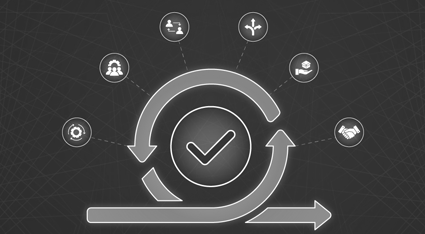
Agile testing methodology offers a dynamic approach to software testing that aligns seamlessly with Agile development frameworks’ iterative and collaborative nature.

Unlike traditional testing methods, which often happen at the end of the development cycle, Agile Testing is an integral part of the development process. It involves testing early and, often, ensuring that quality is built into the software from the ground up.

The Agile Testing Methodology stresses close collaboration between developers, testers, and other stakeholders. Testers work hand-in-hand with the development team, providing feedback and identifying defects as soon as possible. This approach helps to identify and fix issues early in the development cycle, reducing the cost and effort required to fix them later.

What is Agile Testing?

Agile Testing follows the rules and principles of agile software development. With agile software testing, developers can test their code continuously and rapidly. Developers get immediate feedback from customers making it quick to make changes. Agile Testing begins at the start of the project with continuous integration between development and testing.

With continuous integration and delivery, agile testing ensures quality throughout the development life cycle. Developers integrate their code changes several times in a continuous integration while every change that passes all tests is automatically released into production with continuous delivery.

What Are the Principles of Agile Testing?

Look at the principles of agile testing:

  • Early and continuous testing: Testers should start testing the software early and should test the software continuously throughout the development cycle.
  • Whole team approach: Each team member (developers, testers, business analysts, and product owners) ensures product quality.
  • Frequent deliveries: Deliver the working software frequently, typically every two weeks.
  • Close collaboration: Maintain a close collaboration between all team members, ensuring everyone is on the same page.
  • Customer involvement: Continuous involvement of customers throughout the agile development process. Their constant feedback at each iteration helps the team make constant improvements.
  • Flexible approach: Teams can change the requirements during the development process as the approach is flexible.

Agile Testing Life Cycle

With a traditional testing method, users must provide detailed requirements concerning the intended software beforehand. However, agile testing gives them the flexibility to share the changes in the software as it follows an iterative approach.

Look at the Agile Testing Life cycle:


Planning Sprints

Agile testing involves breaking down a large complex project into small manageable fragments. A sprint is a pre-agreed period in which the team works on the requirements and completes them within the duration.

The product owner, developers, and testers discuss goals that need to be attained in each sprint. In addition, the team follows a daily scrum where it talks about their assignments and the issues or obstacles blocking the work.

Designing Test Cases

The testing team needs to maintain a correlation with the development team. The development provides functional requirements documents (FRS) and project design documents, and the test team designs the test cases based on those requirements.

A test case details the entire testing technique and verifies quality tests to ensure the test sticks to the process. Next, they hand over the documented test cases to the QA manager and developers for review for defect prevention.

Quality Verification and Validation

Once the development process is complete, the QA team starts the testing process. The team works together following the agile method. This stage is crucial to check and verify the quality of the developed software.

Review Product Stability

Agile follows iterative development, and thus, it accommodates new requirements. Customers often want to change the features, design, or sometimes the entire idea. With the agile method, new changes can be made at any stage of the development process with no complexities.

Regression and Deployment

Once the new changes are added to the product, the QA team conducts manual and automated tests to verify the quality of the existing functionality. After complete verification, the product is deployed.

What Are Agile Best Practices?

Agile testing is flexible, sustainable, and focuses on quality. Look at the best practices to follow for agile testing:

Customer Collaboration

In the agile approach, customer satisfaction is the foremost. The customer plays a crucial role during the entire development life cycle. Customers share their feedback on each sprint and collaborate for changes in the product. Constant communication with the customer offers better customer satisfaction.

On the other hand, in a traditional development method, the customer shares the details before the development process starts and gets to see the project after completion.

Teamwork

In agile testing, teams work together with effective coordination, communication, and mutual support. With a collaborative mindset and teamwork, agile teams release advanced products.

Motivated Individuals

Motivated individuals can make any difficult project happen. They carry a goal in their day-to-day operations and stay focused on the goal. They can also do any task rapidly and thus are a boon for agile testing.

Organized work

The agile teams split their work into small sprints and divided the tasks among team members for an organized approach. They can accomplish the tasks quickly and efficiently when the work is organized.

What Are The Benefits of Agile Testing Methodology?

Look at the benefits that agile testing offers:

  • Flexible to adjust new changes between the sprints.
  • The tasks are divided into small sprints, and each sprint is an individual task, so it helps better organization. In addition, there are fewer chances of errors, and the end products are more efficient.
  • Agile testing enables developers to use reusable indexes for easy development.
  • Since the tasks are divided into smaller fragments, finding and rectifying the errors is easier.
  • The software delivered is of high quality and delivered within the stipulated time.
  • Simple practices like Scrum meetings help maintain greater correlation amongst teams for an efficient end product.
  • Regularly discussing test reports, including errors and solutions, is easier.

Conclusion

The Agile Testing Methodology has revolutionized the way software is tested and delivered. By embracing collaboration, flexibility, and continuous improvement, Agile Testing enables teams to deliver high-quality software that meets customers’ ever-changing needs.

Implementing Agile Testing can be challenging, but the benefits outweigh the effort. If you want to adopt Agile methodologies and improve your software testing practices, our team at UpsquareCS can help. We have extensive experience in implementing agile testing methodologies for businesses across various industries.

Our Agile experts can guide you through the entire process, from training and coaching to implementing best practices and tools. We’ll work closely with your team to understand your needs and tailor our approach to ensure a seamless transition to Agile Testing.